
Limited editions are how carmakers turn a strong seller into a festive-season headline, and MG’s Windsor EV — already one of India’s best-selling electric cars — received exactly that treatment ahead of Diwali 2025. Just 300 units, a rose-gold-accented cosmetic package, and the same twin-pricing structure that made the standard car famous: a conventional ex-showroom price, or a dramatically lower entry via Battery-as-a-Service. Below are the edition’s full details, followed by a practical decoding of BaaS pricing, limited-edition buying sense, and how the Windsor fits India’s fast-moving EV market.
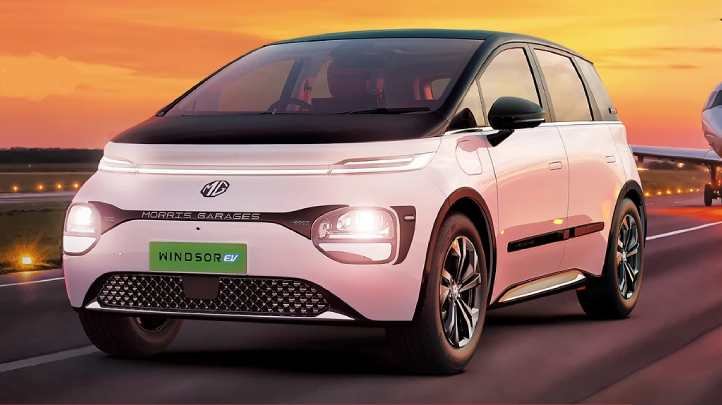
JSW MG Motor India has launched a new special version of its popular electric car — Windsor EV Inspire Edition. Before Diwali, this electric car has already started reaching dealerships across India.
The company has kept the starting ex-showroom price at ₹16.65 lakh. However, customers choosing the Battery-as-a-Service (BaaS) option can buy it for just ₹9.99 lakh. MG Motor also confirmed that this limited edition will be available in only 300 units across the country. Let’s take a look at its design, features, battery, and driving range in detail.
Stylish New Design:
The new Inspire Edition comes with several cosmetic upgrades. It features a dual-tone Pearl White and Starry Black color scheme, all-black alloy wheels with rose-gold accents, black ORVMs, and exclusive “Inspire” branding.
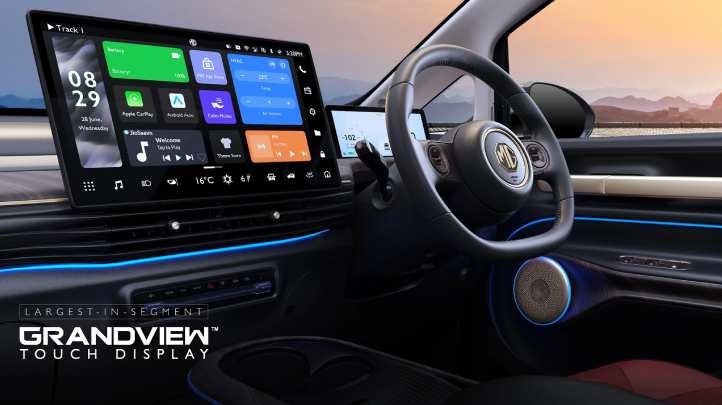
The car also comes with a special accessory pack that includes rose-gold design highlights, front grille and bumper corner protectors.
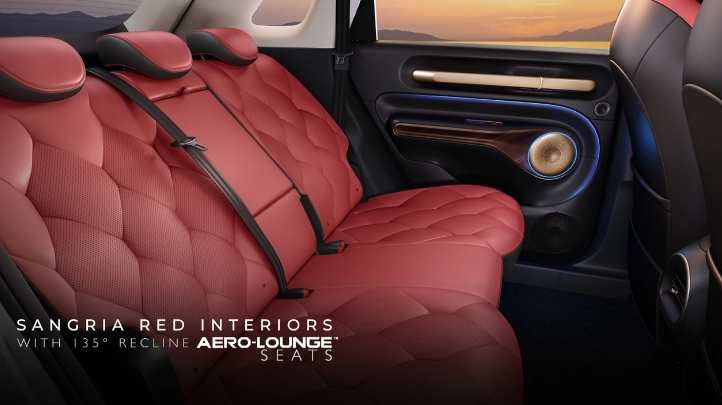
Inside, it gets Sangria Red and Black leather upholstery, an embroidered “Inspire” logo on the headrests, and gold finishing on interior panels for a premium look. Other additions include themed mats, soft cushions, rear sunshades, and a leather key cover.
Power, Battery and Range:
The Windsor EV Inspire Edition is powered by a 38kWh battery pack and a Permanent Magnet Synchronous Motor that produces 134 bhp of power and 200 Nm of torque.
The company claims the car can run up to 331 km on a single charge. With fast charging, it can charge up to 80% in just 40 minutes.
According to MG Motor, the Windsor EV has already crossed 40,000 sales within one year of launch.
Delivery Date:
As per reports from NDTV Auto, deliveries of the Windsor EV Inspire Edition will begin from 15th October 2025, just before the festive season
Decoding BaaS: How ₹16.65 Lakh Becomes ₹9.99 Lakh
Battery-as-a-Service separates the most expensive component of an electric car — the battery — from the vehicle’s sticker price. You buy the car body and motor outright at the lower figure, then pay for the battery through a per-kilometre rental charged monthly, based on the kilometres you drive. The appeal is obvious: EV entry at nearly compact-SUV money, with the battery’s long-term degradation risk shifted to the provider. The trade-offs deserve equal attention: total cost over high-mileage, long-tenure ownership can exceed outright purchase; resale involves transferring or settling the battery arrangement; and the per-kilometre rate plus terms (minimum billing, buyout options, transferability) define the real deal more than the headline. The sensible approach is arithmetic, not attraction — estimate your realistic annual kilometres, multiply across your intended ownership years, and compare both routes’ totals before choosing.
Is a 300-Unit Limited Edition Worth Chasing?
Cosmetic special editions reward two kinds of buyers: those who genuinely love the specific theme — here, the rose-gold-on-black treatment and Sangria Red cabin — and those who value showroom-fresh exclusivity in a car they see daily. What limited cosmetic editions rarely deliver is financial upside; unlike performance specials, appearance packages seldom command resale premiums in India’s used market. Buy the Inspire Edition because the look speaks to you and stock timing suits your Diwali delivery plan — not as an investment. And if the 300 units are gone, remember the mechanical car underneath is identical to the standard Windsor you can buy any month.
Living With a 331 km Claimed Range
Claimed ranges come from standardised test cycles; real-world figures vary with traffic, climate control, and driving style. For a city-focused EV like the Windsor, the practical reading of a 331 km claim is comfortable multi-day urban usage between charges for typical commutes, with intercity trips requiring a fast-charging stop plan. The 40-minute 10–80% fast-charge capability makes highway runs feasible along corridors with charging infrastructure, while overnight home AC charging remains the cheapest and most battery-friendly routine. First-time EV buyers should anchor expectations to roughly 20–25% below claimed figures in mixed use — if that number still covers your week, range anxiety largely evaporates.
Why the Windsor Sells: 40,000 Units in a Year, Explained
Crossing 40,000 sales in twelve months made the Windsor a mainstream product, not an early-adopter experiment — and the recipe is instructive. The BaaS pricing innovation collapsed the EV entry barrier; the crossover-MPV body style delivered family-first cabin space that spec sheets undersell; and MG’s early-mover EV service experience reassured buyers who feared orphaned technology. The lesson for EV shoppers evaluating any brand: pricing structure, cabin practicality, and service confidence move Indian EV decisions more than headline range figures do.
India’s EV Moment: Where the Windsor Fits
The Windsor’s success story is unfolding inside a larger shift. Electric car sales in India have climbed steadily as charging networks expand along metro corridors, state incentives lower entry costs, and a second generation of products replaces early compromise-heavy models. The market’s centre of gravity currently sits exactly where the Windsor plays — family-sized EVs in the ₹10–20 lakh band — making this segment the battleground where every major manufacturer is now landing products. For buyers, competition of this intensity is pure upside: richer features, sharper pricing structures like BaaS, and rapidly improving service ecosystems arrive with every launch cycle.
First-Time EV Owner’s Primer
Switching from petrol to electric changes ownership rhythms more than driving itself. Three adjustments cover most of the learning curve. First, refuelling inverts: instead of weekly pump visits, you plug in overnight and leave home “full” every morning — public fast charging becomes an occasional highway tool, not a routine. Second, maintenance simplifies: no oil changes, fewer moving parts, and brake wear reduced by regenerative braking translate into service bills that surprise former ICE owners pleasantly; tyres and cabin filters become your main consumables. Third, driving style pays differently: smooth inputs and anticipating traffic extend range visibly, and most EVs — the Windsor included — make a game of it with efficiency displays. Give yourself two weeks; most new EV owners report the anxiety questions dissolving into routine within the first fortnight.
Does fast charging harm the battery?
Occasional DC fast charging on trips is engineered for and fine; making it your daily routine accelerates degradation modestly. The healthy pattern is slow AC charging at home for regular use, fast charging for journeys — and under BaaS, degradation risk sits with the provider anyway.
Festive EV Buying Checklist
- Compare BaaS versus outright quotes across your ownership horizon in writing.
- Confirm delivery timelines against the festive rush — limited editions allocate fast, and registration before the muhurat window matters to many families.
- Verify home-charging feasibility: parking spot, wiring capacity, society permissions, and the bundled charger’s specification.
- Ask for the battery warranty terms (years/kilometres/degradation threshold) and, under BaaS, the rental’s escalation and buyout clauses.
- Check state EV incentives — road-tax waivers and registration benefits vary and can move the on-road math meaningfully.
- Insure with an EV-aware policy covering the battery and charger explicitly.
Windsor vs Rivals: The ₹10–20 Lakh EV Question
Shoppers holding an Inspire Edition brochure are usually cross-shopping two or three other electric family cars, and the decision framework matters more than any single spec. Compare on five axes: effective entry price under each brand’s financing or battery-rental structures, not just ex-showroom; usable real-world range for your weekly pattern rather than headline claims; charging ecosystem — bundled home charger, dealer DC coverage on your regular highways; cabin practicality measured with your own family seated in the back; and warranty architecture, especially the battery’s years, kilometres, and degradation threshold. The Windsor’s pitch concentrates on the first and fourth axes — BaaS entry pricing and lounge-like rear space — which is precisely why it resonated with family buyers. Whether that pitch beats a rival’s stronger range or brand familiarity is a personal weighting no review can settle for you; a same-day back-to-back test drive usually can.
Should I wait for newer EV launches instead?
India’s EV calendar is crowded, and something newer is always months away. The practical rule: buy when an available car covers your real usage comfortably within budget — waiting has a cost too, in fuel spent and festive offers missed. Technology churn matters most at the premium end; in the family segment, today’s proven sellers age gracefully.
Booking an Inspire Edition: Timing and Allocation
With just 300 units nationwide, allocation runs on booking sequence and dealer quotas — metros typically absorb limited runs within days of festive announcements. If the edition is your goal, book early in the window, confirm your dealer’s allocated quantity in writing, and ask where you stand in their queue. If allocation misses you, resist paying any premium a reseller might attach to scarcity; the standard Windsor delivers every functional attribute, and dealer accessories can approximate much of the cosmetic theme at modest cost.
One more allocation nuance: festive editions occasionally return in second batches if demand justifies it, so a missed first run is not always final — ask your dealer to note your interest formally, since manufacturers gauge encore runs from exactly such waitlists.
FAQs
What is the price of the MG Windsor EV Inspire Edition?
₹16.65 lakh ex-showroom outright, or ₹9.99 lakh under the Battery-as-a-Service plan where the battery is paid for via a per-kilometre monthly rental.
How many Inspire Edition units will be sold?
MG confirmed a run of 300 units nationwide, with deliveries beginning 15 October 2025 — timed for Diwali.
What is the range and charging time of the Windsor EV?
The 38 kWh pack carries a claimed 331 km per charge, with DC fast charging taking the battery to 80% in around 40 minutes. Real-world range depends on usage patterns.
Is BaaS better than buying the battery outright?
For moderate annual running and shorter ownership horizons, BaaS’s lower entry often wins; for high-mileage, keep-it-a-decade owners, outright purchase usually totals cheaper. Run both calculations against your own kilometres before deciding.
What is different in the Inspire Edition versus the standard Windsor?
Purely cosmetic enhancements — dual-tone Pearl White/Starry Black paint, rose-gold accents, black alloys, Sangria Red-and-black leather cabin with Inspire branding, plus an accessory pack. Battery, motor, and performance are unchanged.
Are these details still current?
This article reflects the October 2025 launch snapshot. Prices, BaaS rates, and availability change — verify with an authorized JSW MG Motor India dealership or the official website before booking.
What happens to BaaS if I sell the car?
The battery arrangement either transfers to the next owner or is settled via the provider’s buyout terms — the contract specifies which, and at what cost. Read those clauses at purchase, not at resale; they materially affect your car’s second-hand appeal.
Do state EV incentives apply to limited editions?
Yes — incentives attach to the vehicle’s powertrain and category, not its trim badging. Road-tax and registration benefits vary by state, so confirm your state’s current policy while computing the on-road figure.
Is the Windsor suitable as a household’s only car?
For urban-plus-occasional-highway families with home charging, comfortably — the range, space, and fast-charging support cover typical patterns. Households doing frequent long intercity runs through sparse charging corridors may prefer keeping one ICE vehicle until networks thicken further.
Conclusion
The Inspire Edition is a textbook festive special: scarce, stylish, and mechanically identical to a proven best-seller. Its deeper significance is what it decorates — a car whose pricing innovation pulled electric mobility into mainstream family budgets and racked up 40,000 sales to prove it. Whether you chase one of the 300 units or the standard Windsor beside it in the showroom, do the BaaS arithmetic honestly, plan your charging, and confirm live prices and stock with official channels — festive-season EV offers move as fast as the deliveries do.
Helpful Links
- JSW MG Motor India — Official Website
- e-AMRIT (NITI Aayog) — Official EV Information Portal

The Carsfame Editorial Team publishes accurate and up-to-date content on government jobs, private jobs, internships, and career opportunities. Every article is reviewed using trusted public sources and official notifications to ensure accuracy and reliability.