
Compact SUVs are the centre of gravity of India’s car market — the segment where hatchback buyers upgrade, families consolidate, and manufacturers fight hardest for every rank. September 2025’s sales chart delivered a striking headline: the Tata Nexon nearly doubled its year-ago volumes to reclaim the segment crown. Below is the full top-10 table with year-on-year movement, followed by what these numbers actually mean — for the market, and more practically, for anyone planning to buy a compact SUV in the months ahead.
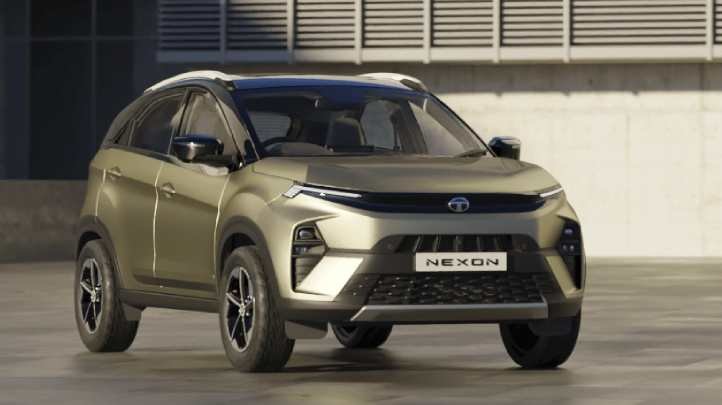
The demand for compact SUVs has been rising rapidly among Indian buyers over the last few years. In September 2025, this trend continued, and Tata Nexon once again claimed the top position in the country’s SUV sales chart.
According to sales data, Tata Nexon registered 22,573 new buyers in September 2025. Compared to the same month last year (September 2024), when 11,470 units were sold, the Nexon’s sales grew by an impressive 97% year-on-year.
Let’s take a detailed look at the top 10 best-selling compact SUVs in India for September 2025.
🥈 Tata Punch Holds Second Spot
At number two on the list is the Tata Punch, which also performed strongly in the market. Tata sold 15,891 units of the Punch SUV in September 2025, marking a 16% increase in annual sales.
This strong performance shows Tata Motors’ dominance in the compact SUV segment with both the Nexon and Punch securing the top two ranks.
🥉 Maruti Fronx Sales Drop Slightly
Taking the third spot is Maruti Suzuki Fronx, which recorded a slight dip in sales. Maruti sold 13,767 units of the Fronx SUV, marking a 1% drop compared to last year.
While the Fronx remains one of Maruti’s popular models, the tough competition from Tata and Hyundai appears to be affecting its sales growth.
🚗 Hyundai Venue at Fourth Position
At number four, the Hyundai Venue showed a positive trend, with 11,484 units sold in September 2025. This marks a 12% growth in sales compared to the same month last year.
The Venue continues to be one of the most reliable choices for buyers who prefer a feature-rich, compact SUV.
📉 Maruti Brezza Sales Drop 34%
The Maruti Suzuki Brezza, once a market leader, slipped to the fifth position in September 2025. The SUV recorded 10,173 unit sales, showing a 34% year-on-year decline.
The drop indicates growing competition in this segment, especially from Tata and Hyundai models.
⚙️ Kia Sonet and Mahindra XUV 3XO Performance
At sixth place, the Kia Sonet recorded 9,300 unit sales, showing a 13% decline compared to last year.
Meanwhile, at seventh position, the Mahindra XUV 3XO sold 9,032 units, maintaining a stable presence in the list of India’s top-selling compact SUVs.
🚘 Hyundai Exter, Skoda Kushaq, and Toyota Taisor in the Top 10
- 8th: Hyundai Exter – 5,643 units sold, down by 18% year-on-year.
- 9th: Skoda Kushaq – 4,318 units sold, maintaining decent performance in the premium compact SUV space.
- 10th: Toyota Taisor – 2,297 units sold, with a 1% growth compared to last year.
Even though these SUVs are lower in the rankings, they continue to attract niche customer segments in India.
September 2025 Top-10 at a Glance
Summarising the month’s compact-SUV standings: Tata Nexon led with 22,573 units (up 97%), followed by the Tata Punch at 15,891 (up 16%), Maruti Fronx at 13,767 (down 1%), Hyundai Venue at 11,484 (up 12%), and Maruti Brezza at 10,173 (down 34%). The bottom half comprised the Kia Sonet at 9,300 (down 13%), Mahindra XUV 3XO at 9,032, Hyundai Exter at 5,643 (down 18%), Skoda Kushaq at 4,318, and Toyota Taisor at 2,297 (up 1%). Together the ten models moved over one lakh units in a single month — a scale that explains why every manufacturer fights hardest in exactly this segment.

What’s Powering the Nexon’s 97% Surge
A near-doubling of monthly volume rarely comes from one lever. The Nexon entered the festive quarter with an unusually broad appeal stack: a wide price ladder from accessible petrol variants to fully loaded trims, availability of multiple powertrains including CNG and an electric sibling, Tata’s hard-won safety reputation in a segment where buyers increasingly check crash ratings, and the GST-linked price rationalisation that made September-October window pricing especially attractive. Layer festive-season purchase timing on top — many Indian buyers deliberately align deliveries with the Navratri–Diwali corridor — and the conditions for a record month were all present.
Tata’s 1-2 Finish: A Segment Power Shift
The Nexon and Punch holding the top two spots simultaneously underlines how far Tata Motors has come in a segment Maruti once owned. The two models bracket the compact-SUV market from both ends — the Punch converting hatchback upgraders at the entry point, the Nexon defending the heart of the segment. For rivals, the strategic problem is that Tata’s pair leaves little price whitespace between roughly ₹6 lakh and ₹15 lakh on-road.
Reading the Rest of the Table
Maruti’s Mixed Month
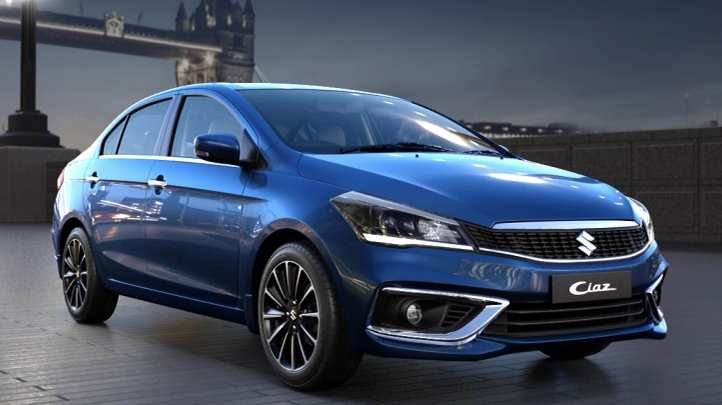
The Fronx’s marginal 1% dip is noise; the Brezza’s 34% fall is signal. The Brezza’s challenge is age and intensity of competition — newer rivals offer more features and fresher styling at similar money, and the sales chart is reflecting it.
Hyundai and Kia: Diverging Cousins
The Venue’s 12% growth against the Sonet’s 13% decline is notable given the two share underpinnings. Positioning and refresh timing matter: the model with the more recent update and sharper festive positioning captured the momentum.
The Niche Players
Kushaq and Taisor volumes look small beside the leaders, but both serve deliberate niches — European driving manners in the Skoda’s case, badge-plus-value cross-shopping in the Toyota’s. Niche standing isn’t failure; it is a different business model with steadier, if smaller, demand.
What Sales Rankings Mean for Car Buyers
Sales charts are more useful to buyers than they first appear — but not in the obvious way.

- High sellers bring dense service familiarity, abundant spares, strong resale demand, and quick availability of accessories — but shorter discounts and longer waiting periods in peak months.
- Declining sellers often become negotiation goldmines: dealers carrying slow stock offer their best festive numbers on exactly the models falling down this table. A 34% YoY decline frequently translates into the segment’s best discounts for an objectively capable car.
- Niche models reward buyers who value differentiation and are comfortable with a thinner service footprint.
The practical play: shortlist on fit and safety first, then use this table to decide where your negotiation leverage lies.
How to Verify Sales Numbers Yourself
Monthly dispatch figures come from manufacturer disclosures and industry-body reporting, while registration data on the government’s VAHAN dashboard reflects actual retail. The two can diverge in festive months when dealers stock up ahead of demand — a useful nuance when a “record month” headline appears. Serious buyers tracking a model’s trajectory should watch both across two or three months rather than a single spike.
Five Years of Compact-SUV Dominance: How We Got Here
The segment’s rise is the defining Indian car-market story of the decade. Compact SUVs went from a tax-arbitrage experiment — sub-4-metre bodies engineered around duty slabs — to the default family car, displacing both premium hatchbacks and entry sedans along the way. Three forces did the work. Ground clearance and seating height matched Indian road realities and buyer aspirations simultaneously. Manufacturers concentrated their newest platforms, features, and safety engineering in the segment, so each generation genuinely out-specified the last. And the price ladder widened until a “compact SUV” could mean anything from an entry variant near a hatchback’s price to a loaded turbo-automatic brushing the premium space — letting one body style serve first-time buyers and third-car households alike. September 2025’s twenty-two-thousand-unit chart-topper is simply that decade of momentum expressed in a single month’s number.
For the used-car shopper, this history has a bonus implication: the first waves of this SUV boom are now maturing into the pre-owned market, making three-to-five-year-old compact SUVs one of the best-supplied used segments in the country. Buyers priced out of new chart-toppers increasingly find their answer there — another quiet driver of brand loyalty that today’s rankings will shape for years.
The Compact SUV Buyer’s Decision Framework
With ten credible options in one segment, structured shortlisting beats showroom wandering. A framework that works for most households:
- Fix the on-road budget first, including insurance and accessories, and resist the “just one variant higher” spiral — it is how ₹10 lakh plans become ₹13 lakh invoices.
- Decide the powertrain by usage: city-heavy, low daily running favours petrol; high running with station access favours CNG; highway-heavy usage brings turbo-petrol or diesel (where offered) into play; home charging unlocks the EV question.
- Set a safety floor: six airbags and a published crash rating are reasonable 2026 minimums in this segment — several table-toppers meet both.
- Shortlist three, test two back-to-back, on the same route on the same day. Suspension and seat comfort differences that decide long-term satisfaction only reveal themselves in direct comparison.
- Negotiate with the chart in hand: waiting periods on leaders are quotable leverage at rival showrooms, and decliners’ dealers know exactly why you are asking for more.
Segment Outlook: What to Watch Next
Three storylines will shape the coming quarters. First, whether Tata can sustain a festive-inflated number once seasonal demand normalises — a repeat above twenty thousand in a lean month would signal a durable shift rather than a spike. Second, Maruti’s response: the Brezza’s slide invites either a significant update or sharper positioning, and Maruti historically responds fast when a core model bleeds share. Third, the electric ripple: as compact electric SUVs multiply, some volume will migrate off this petrol-dominated table entirely, changing what “No.1 SUV” even measures. Buyers timing a purchase two or three quarters out should track these threads — they will move prices, discounts, and launch calendars across the whole segment.
FAQs
Which was India’s best-selling SUV in September 2025?
The Tata Nexon, with 22,573 units — a 97% jump over September 2024’s 11,470 units — leading the compact SUV chart.
Why did Maruti Brezza sales fall so sharply?
A 34% decline reflects intensified competition from newer rivals offering fresher designs and richer features at comparable prices, alongside buyer migration within Maruti’s own lineup toward the Fronx.
Does the top-selling SUV mean it is the best SUV?
No — sales leadership signals market trust, service reach, and resale strength, but the “best” SUV for you depends on budget, safety priorities, powertrain needs, and how each contender drives on your roads. Test at least two rivals.
Is festive season the best time to buy a compact SUV?
Often, yes — manufacturer schemes, exchange bonuses, and structural price cuts (like 2025’s GST-linked revisions) tend to coincide. The trade-off is longer waiting periods on chart-toppers; slow sellers deliver both discounts and quick delivery.
Where can I check official monthly car sales data?
Industry-body releases (SIAM) and the government’s VAHAN registration dashboard are the two authoritative sources; manufacturer press releases fill in model-level details.
Do festive-month sales spikes affect waiting periods?
Significantly — chart-leading models can see waiting stretch by weeks in October–November, while slower sellers deliver from stock. If your purchase is delivery-date-sensitive, factor the rankings into your shortlist.
Should I wait for a facelift if a model is declining in sales?
If a core model is sliding, a refresh is usually in the pipeline — but so are the best discounts on the outgoing version. Buyers who keep cars long-term often gain more from the discounted current car than from waiting quarters for a costlier update.
Conclusion
September 2025’s chart tells a clean story: Tata’s twin-SUV strategy is setting the segment’s pace, Hyundai is holding firm, and Maruti’s compact-SUV bench faces its stiffest test in years. For buyers, the table doubles as a negotiation map — queue up for the leaders if resale and network matter most, or hunt genuine bargains among the decliners. Either way, verify the current month’s prices, offers, and waiting periods at authorized dealerships, because in this segment the standings — and the deals — change monthly.
Helpful Links

The Carsfame Editorial Team publishes accurate and up-to-date content on government jobs, private jobs, internships, and career opportunities. Every article is reviewed using trusted public sources and official notifications to ensure accuracy and reliability.