
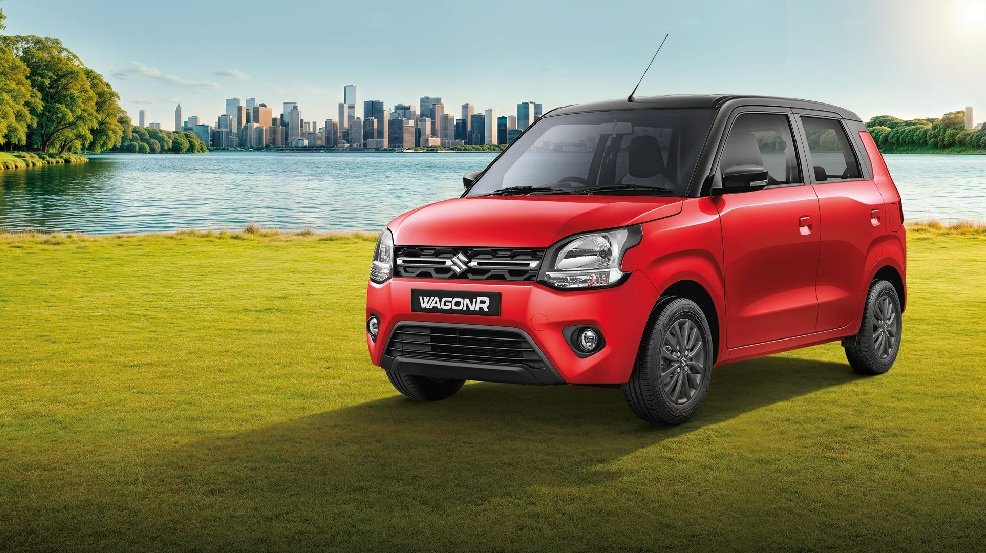
When India’s best-selling car becomes nearly ₹80,000 cheaper overnight, the entire entry segment feels it. The 2025 GST rationalisation delivered exactly that moment for the Maruti WagonR — FY2025’s No.1 seller dropping to a ₹4.98 lakh starting price just as festive demand peaked. This article covers the price cut and the sales chart it disrupted, then goes deeper: why the tall-boy formula keeps winning after two decades, how the top-five table should influence your shortlist, and a first-car buyer’s playbook for turning a tax cut into a genuinely good deal.
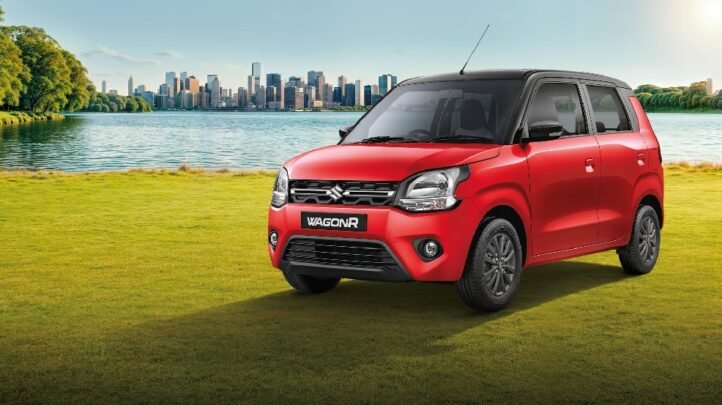
Maruti Suzuki has brought exciting news for Indian car buyers. The Maruti Suzuki WagonR, which ranked as the No.1 selling car of FY2025, is now available at a starting price of just ₹4.98 lakh (ex-showroom). This major price drop of ₹79,600 has made the WagonR an even more attractive option for families and first-time buyers.
Huge Price Drop After GST Cut
The government’s GST reduction has allowed Maruti Suzuki to lower car prices across its range, making models cheaper by up to ₹1.3 lakh. Among these, the WagonR, which was already India’s most popular car, became even more affordable.
Why WagonR is India’s Favorite Family Car?
The WagonR is often called “India’s family car”, and here’s why it continues to dominate the market:
✔ Spacious cabin with ample legroom
✔ Powerful yet fuel-efficient engine
✔ Excellent mileage of 33 km/l+
✔ Low running & maintenance cost
These qualities make it the top choice for middle-class households and new car buyers.
WagonR Tops FY2025 Sales Chart:
| Rank | Car Model | FY2025 Sales | FY2024 Sales | Growth |
| 1 | Maruti WagonR | 1,98,451 | 1,90,855 | 4% |
| 2 | Tata Punch | 1,96,572 | 2,02,031 | -3% |
| 3 | Hyundai Creta | 1,94,871 | 1,86,160 | 5% |
| 4 | Maruti Ertiga | 1,90,972 | 1,90,091 | 0.50% |
| 5 | Maruti Brezza | 1,89,163 | 1,88,160 | 0.50% |
In FY2025, the WagonR sold 1,98,451 units, beating rivals like Tata Punch (1,96,572 units) and Hyundai Creta (1,94,871 units)
The Tall-Boy Formula: Two Decades of Getting India Right
The WagonR’s endurance is a masterclass in product-market fit. Its upright “tall-boy” body maximises cabin height and glass area within a small footprint — easy entry for elderly parents, commanding visibility in traffic, effortless city parking. The mechanicals prioritise what Indian household budgets punish or reward: frugal petrol and factory CNG options, service costs among the lowest in the market, and parts available in effectively every town. Add resale values propped up by permanent used-market demand and driving-school familiarity that makes it many families’ literal first car, and the FY2025 crown looks less like luck than arithmetic. Fashion moved to SUVs; function kept voting WagonR.

Reading the FY2025 Top Five
The chart’s tightness is its real story — barely 9,000 units separating first from fifth across a full year. Three observations matter for buyers. Maruti placing three models in the top five (WagonR, Ertiga, Brezza) shows breadth no rival matches at the volume end. The Punch’s slight dip against the WagonR’s growth captures the price-sensitivity of entry buyers — when tax cuts favour small cars, hatchbacks claw back ground from micro-SUVs. And the Creta’s presence as the lone mid-size SUV among budget champions confirms India’s two-speed market: value dominates volume, while aspiration concentrates a segment above.
GST Cuts and Car Prices: What Buyers Should Understand
The ₹79,600 reduction is structural — a tax-driven reprice, not a dealer scheme with an expiry date. Practical implications: it stacks with whatever exchange bonuses or festive benefits dealers layer on top; it compresses the gap between variants, often making the better-equipped trim the smarter buy; and it ripples into CNG variants’ payback math, shortening the kilometres needed to justify the CNG premium. When tax cuts land, re-run your variant comparison from scratch — yesterday’s value pick may no longer be today’s.
CNG Deep-Dive: The WagonR’s Secret Weapon
Factory CNG is where the WagonR’s value story compounds. Against aftermarket kits, the factory setup preserves warranty, integrates safety validation, and calibrates the engine for both fuels — differences that show up in reliability and resale. The running-cost gap versus petrol remains substantial per kilometre, which is why the payback window on the CNG premium shrinks quickly for daily commuters and disappears entirely for commercial users. Costs to acknowledge: modest boot-space sacrifice to the tank, periodic tank certification requirements, and route planning around station availability in smaller towns. For the archetypal WagonR household — city running, predictable commutes, cost discipline — the CNG variant is less an option than the point.
How long does CNG tank certification take and cost?
Hydro-testing is a periodic legal requirement (typically every few years) done in a day at authorised centres for a modest fee — a small, plannable cost against years of fuel savings. Keep the certificate with vehicle papers; insurers and RTO checks ask for it.
How the Price Cut Reshuffles the Entry Segment
A sub-₹5-lakh WagonR pressures every neighbour on the price ladder. Entry hatchbacks that undercut it on price must now argue against a roomier, better-networked incumbent within touching distance. Micro-SUVs a step above must justify their premium against a champion whose on-road total suddenly buys their base variants outright. Even the used-car market recalibrates, as nearly-new examples lose ground to a cheaper new car with full warranty. For shoppers, the strategic takeaway is to re-quote everything on your shortlist after a structural cut like this — segment mathematics that held last month may have quietly inverted.
Negotiating on a Chart-Topper
Best-sellers negotiate differently from slow movers: discounts run thinner, but leverage still exists. Time your purchase to month-end targets, bring exchange-bonus eligibility documents ready, price accessories and extended warranty into the conversation rather than the invoice, and quote rival waiting-period-free offers where true. On CNG variants, dealer-level fitment freebies (fast-tag, mats, first-service perks) concede more readily than cash. And if the waiting period stretches past your festival deadline, ask about alternative colours or the adjacent variant — allocation flexibility often hides a week of waiting.
First-Car Buyer’s Playbook for the WagonR
- Variant sense: mid trims typically balance essentials (touchscreen, safety kit) against price best; base variants suit pure point-A-to-B duty.
- Petrol vs CNG: above roughly 1,000–1,200 km monthly with CNG stations on your routes, the factory CNG usually wins on total cost; below that, petrol’s flexibility prevails.
- AMT option: the automated manual adds city convenience at modest cost — worth it for congested commutes, skippable for highway-light usage.
- On-road math: add 10–15% over ex-showroom for registration and insurance depending on state; compare insurer quotes beyond the dealer’s bundle.
- Delivery timing: chart-toppers carry waiting periods in festive months — book early or leverage quick-delivery rivals in negotiation.
Twenty-Five Years of WagonR: A Short History of a Long Reign
Launched in India at the turn of the millennium, the WagonR began as an oddity — critics called the boxy silhouette awkward while buyers quietly discovered that the box was the point. Successive generations kept the recipe intact while modernising everything inside it: stronger platforms, better safety equipment, smartphone-friendly infotainment, and the factory CNG option that turned it into the default choice for cost-conscious high-mileage households. Through hatchback fashion cycles, diesel booms, and the SUV wave, the WagonR’s sales line barely flinched — a consistency almost no nameplate in any market matches. FY2025’s crown is simply the latest data point on a quarter-century trend.
What WagonR Ownership Actually Costs
The WagonR’s deepest moat is the total-cost ledger. Routine services are inexpensive and quick, thanks to shared parts and every-corner workshop familiarity. Insurance premiums sit at the affordable end for its class. Fuel economy — petrol respectable, CNG exceptional — keeps monthly outgoings predictable, and the dense CNG-fitment ecosystem means even out-of-warranty repairs stay cheap. Most decisively, resale: used WagonRs move fast at strong prices because the same virtues that attracted you attract the next buyer. Budget-planning rule of thumb: beyond EMI and fuel, a well-maintained WagonR’s annual running (service, insurance renewal, consumables) typically stays comfortably in the lowest band of the Indian market — which is precisely why fleet operators and driving schools standardise on it.
The Safety Conversation, Honestly
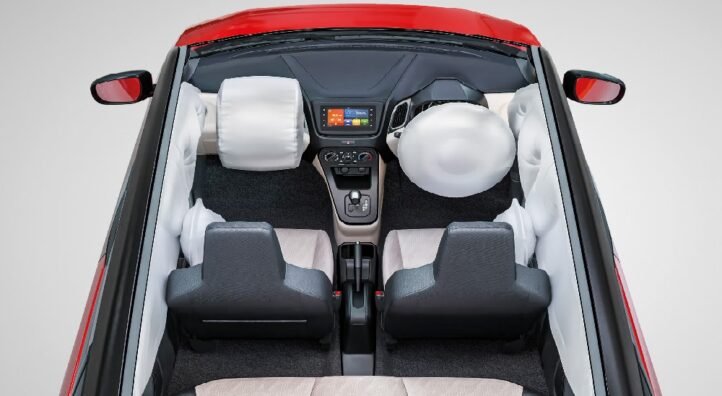
No WagonR discussion is complete without safety nuance. Modern variants carry dual airbags, ABS with EBD, reverse sensors, and stronger structures than their predecessors, meeting current regulatory requirements. Buyers benchmarking against segment safety leaders should note the trade-offs entry pricing implies, check the latest crash-test information for the current model year, and consider higher variants where additional airbags are offered. For many households the WagonR’s city-speed usage profile keeps the risk calculus acceptable; safety-first buyers with highway-heavy patterns should weigh alternatives with stronger published ratings — and either way, insist on rear seatbelt discipline, which moves real-world outcomes more than spec sheets do.
Is a used WagonR a good alternative to the new price-cut car?
The GST cut compressed new-versus-used math: a three-year-old example’s price advantage over the new ₹4.98 lakh entry narrowed meaningfully. Unless a used unit is exceptional and local, the new car’s full warranty, fresh CNG kit, and latest safety kit now win the comparison more often than before — run both numbers before assuming used is cheaper.
Which WagonR variant offers the best value after the price cut?
With the entry price lowered, the step up to mid variants costs proportionally less — making the touchscreen-and-safety-equipped middle of the range the sweet spot for most family buyers, and the CNG mid variant the pick for high-runners.
FAQs
What is the new starting price of the Maruti WagonR after the GST cut?
₹4.98 lakh ex-showroom — a reduction of ₹79,600 — with on-road prices varying by state, variant, and insurance choices.
Was the WagonR really India’s best-selling car in FY2025?
Yes — 1,98,451 units, edging the Tata Punch (1,96,572) and Hyundai Creta (1,94,871) in one of the closest top-five finishes in years.
Does the WagonR really deliver 33 km/l mileage?
Figures in that range refer to CNG running under standard test conditions; petrol variants deliver lower, still-frugal numbers. Real-world efficiency depends on traffic, load, and driving style — treat claims as comparative benchmarks.
Is the GST price cut a limited-time offer?
No — tax-driven reductions are structural and persist until rates or manufacturer pricing change. Dealer-level festive benefits, which stack on top, are the time-limited component.
WagonR or Tata Punch — which should a first-time buyer pick?
The WagonR wins on running costs, cabin practicality, and resale liquidity; the Punch counters with SUV styling and a stronger crash-test story. Match the trade-off to your priority — budget arithmetic favours the Maruti, safety-first buyers lean Tata — and test both back-to-back.
Are these prices and figures still current?
They reflect the September 2025 snapshot following the GST revision. Prices and offers move — verify with an authorized Maruti Suzuki dealership or the official website before booking.
Does the WagonR suit highway driving?
It is competent at legal cruising speeds with sensible loading, though its tall, light body prioritises city agility over expressway planted-ness. Frequent long-distance drivers may prefer heavier alternatives; the occasional intercity run is well within its brief.
Will the GST-cut prices apply in every state?
Ex-showroom reductions apply nationally; your final on-road figure still varies with state road tax, registration charges, and insurance. Compare on-road quotes, not ex-showroom headlines, when cross-shopping cities.
Conclusion
The WagonR’s price cut is the rare headline that genuinely changes entry-segment math: India’s volume champion, already the running-cost benchmark, now starts under ₹5 lakh. For families and first-time buyers the playbook is straightforward — pick the variant by usage, run the CNG arithmetic honestly, stack festive benefits on the structural cut, and confirm live pricing at an official dealership. Two decades in, the tall-boy is still the sensible default; the tax cut just made sensible cheaper.
One final planning note for festive buyers: structural price cuts historically trigger demand surges that stretch chart-topper waiting periods within weeks of announcement. If the reduced price has moved the WagonR onto your shortlist, booking earlier in the cycle protects both your delivery date and your pick of colour and variant.
Helpful Links
- Maruti Suzuki — Official Website
- SIAM — Official Sales Statistics
- VAHAN Dashboard — Registration Data

The Carsfame Editorial Team publishes accurate and up-to-date content on government jobs, private jobs, internships, and career opportunities. Every article is reviewed using trusted public sources and official notifications to ensure accuracy and reliability.